

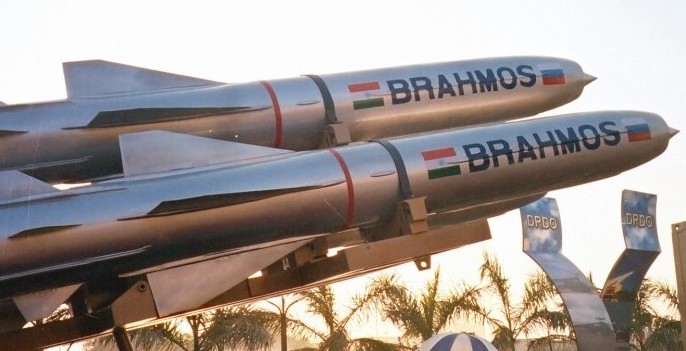
As part of its attempts to upgrade its naval forces and enhance maritime security in the Indo-Pacific region, Thailand is contemplating the acquisition of the anti-ship variant of India’s BrahMos supersonic cruise missile.
This possible purchase exemplifies Bangkok’s approach to defence procurement diversification and foreign policy balance in the face of intensifying geopolitical rivalry between China and the US.
Defence analysts claim that operational needs, not a desire to challenge Beijing, are the primary motivation for Thailand’s acquisition of the BrahMos missile. In the past, the Southeast Asian country has maintained defence and commercial links with numerous global powers, following a strategy of strategic hedging.
One of the world’s fastest operational cruise missiles, the BrahMos was developed jointly by Russia and India’s Defence Research and Development Organisation (DRDO). Launched from land, sea, or air platforms, the anti-ship variant may strike targets at speeds nearing Mach 3.
The Royal Thai Navy’s capacity to counter maritime threats and safeguard vital sea lanes and coastal assets might be greatly improved with the installation of the missile system.
In keeping with its long-standing policy of strategic autonomy, Thailand has traditionally purchased military hardware from a variety of nations, including the US and China. According to analysts, picking military hardware based on operational performance is more important than geopolitical factors, and assessing the BrahMos system fits in with this strategy.
Countries in the Indo-Pacific area are spending extensively in cutting-edge naval vessels, surveillance systems, and long-range precision weaponry, and this move is part of a larger effort to bolster maritime security in the region.
Following the successful delivery of BrahMos missiles to the Philippines and ongoing conversations with nations like Indonesia and the United Arab Emirates, a prospective agreement with Thailand would be another milestone in India’s burgeoning defence exports.
The results of the 10th India-Thailand Defence Dialogue, which took place in Bangkok in June 2026, are also a foundation for this new development. After elevating their bilateral relations to a strategic partnership in 2025, the two nations recommitted themselves during the conference to further cooperation in military manufacture and capability development.
Discussions over the BrahMos missile are still in their early stages, but Thailand’s interest in it shows that middle powers like Thailand are looking for ways to shore up their security while still maintaining their strategic autonomy.