

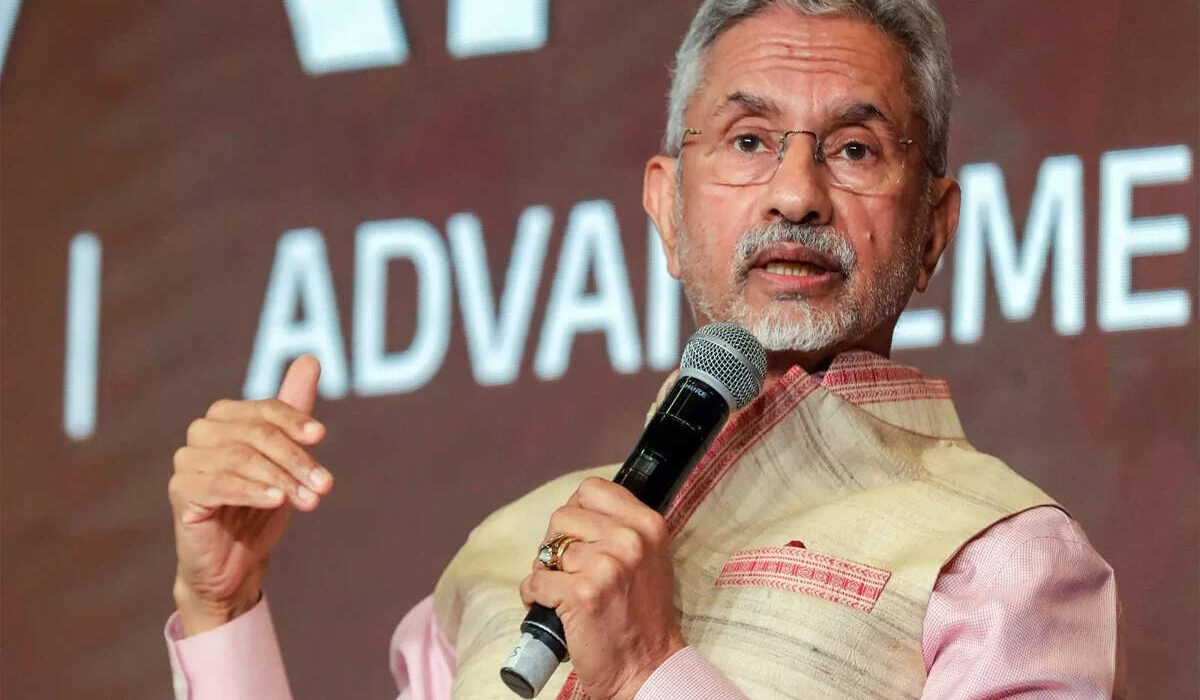
As part of his remarks at the G7 Foreign Ministers’ Meeting in France, External Affairs Minister S. Jaishankar highlighted the increasing significance of the India-Middle East-Europe Economic Corridor (IMEC) in enhancing global connectivity and supply chain resilience.
While speaking to the group, Jaishankar brought up the fact that the necessity for safe and varied trade routes has been further highlighted by the persistent tensions in West Asia. According to him, the need for robust supply chains and alternative connectivity frameworks such as IMEC is more pressing in light of geopolitical concerns.
He went on to say that the corridor is now much more useful and strategically relevant due to India’s growing trade architecture, which includes FTAs with the EU, the EFTA, and the UK.
Jaishankar went on to say that IMEC is becoming more and more important around the world, and that it is a crucial project for bridging the gap between Europe, the Middle East, and Asia via logistics and infrastructure integration.
The minister emphasised the need for immediate changes to the UN Security Council, better peacekeeping operations, and more efficient humanitarian supply chains, in addition to connectivity. Energy security, fertiliser availability, and food supply difficulties were among the Global South’s concerns that he brought up.
Jaishankar met with Yvette Cooper, the UK foreign secretary, and Johann Wadephul, the German foreign minister, on the fringes of the summit to discuss bilateral relations and international news.
With his presence at the G7 summit, India is demonstrating its increasing influence in defining international economic and geopolitical frameworks, especially in the domains of supply chain resilience, connectivity, and trade.