


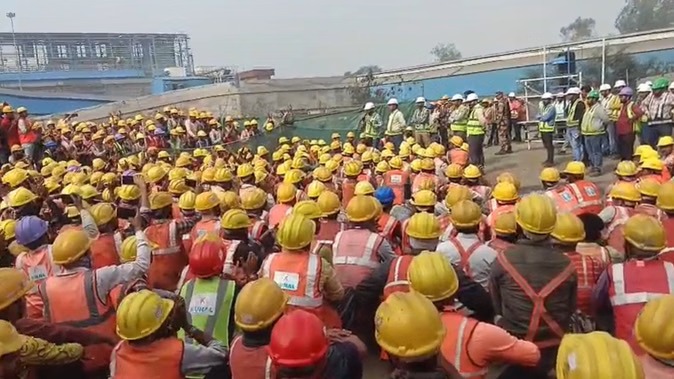
On Monday, a large demonstration outside the corporate gate of Bharat Heavy Electricals Limited (BHEL) caused tensions to escalate at the NTPC Singrauli Power Plant, where contractual workers were involved in the Stage‑III expansion project. Outrage and a work stoppage were sparked by workers’ claims that they are compelled to work 12-hour shifts but only paid for 8 hours. Protesting employees say they are not paid legally for overtime and that many of them have to wait a long time to get their normal pay cheques, even if they work extra. The workers here are prepared to put in long hours, but someone needs to pay them what they’re worth.
Workers at the coal-fired power station, one of India’s biggest, are demanding fair compensation, prompt payments, and adherence to overtime regulations outlined in the Factories Act, all of which have been the subject of escalating discontent among the workforce. The Singrauli Super Thermal Power Station is now experiencing a Stage‑III expansion under the management of NTPC Limited. Important equipment supply and erection work is handled by BHEL, a state-owned engineering organization. This episode highlights the difficulties in managing contract employment and the wellbeing of workers on massive infrastructure projects, notwithstanding BHEL’s lengthy history in India’s power sector. Overtime pay is required by Indian labour legislation for any hours worked above the normal 8-hour workday, and businesses are obligated to pay their employees on time. When regulations are not followed, the labour department and other relevant regulatory bodies may take action. Workers outside the BHEL gates continued their sit-in protests, which temporarily interrupted operations at the NTPC Singrauli complex. Officials from NTPC and BHEL have not yet commented on the claims.