

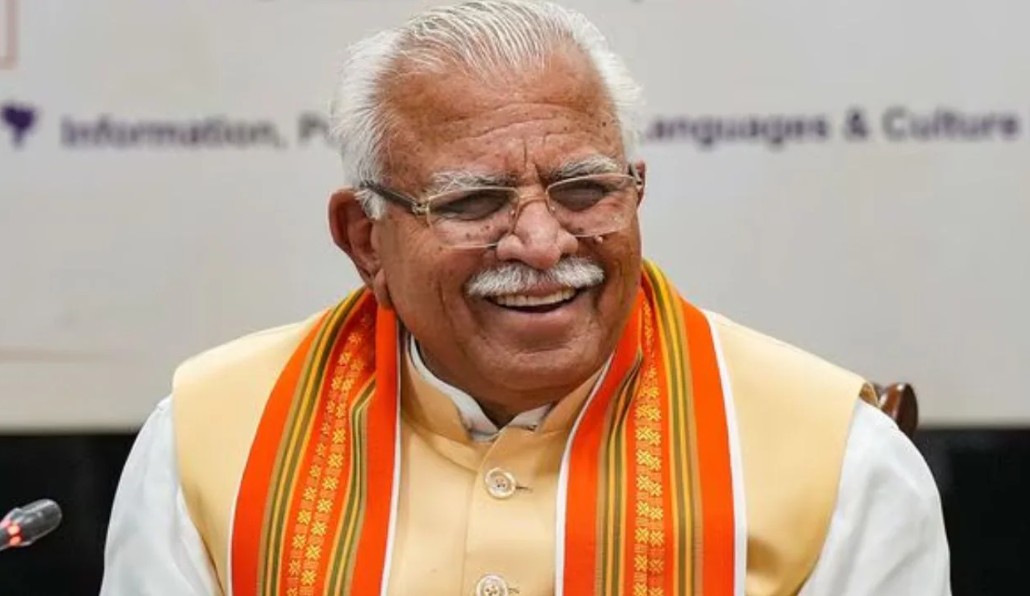
Indian Power Minister Manohar Lal Khattar highlighted the country’s fast energy landscape transformation on Thursday by saying that the power sector is entering a new era driven by innovation, affordability, and global collaboration.
At the Bharat electrical Summit 2026, the minister celebrated a major milestone in India’s clean energy transition: the country has reached 50% cumulative non-fossil fuel based electrical capacity ahead of time.
Among the important policy efforts he mentioned were the SHANTI Act of 2025 and the PM Surya Ghar Muft Bijli Yojana, both of which have helped to speed up the use of renewable energy and improve the sustainability framework in the industry.
According to Khattar, India has gone from having a power deficit to having a surplus, thanks to the rapid expansion of renewable capacity. The impressive growth momentum in solar power capacity over the past few years has seen it skyrocket from 2.8 GW to more than 143 GW.
Rising power consumption was another issue brought up by the minister. He mentioned that India is becoming ready to meet peak demand beyond 270 GW, following its successful management of 250 GW in FY25.
He predicted that, over the next twenty years, the industry will draw investments of about ₹200 lakh crore. In order to establish India as a leading supplier of affordable energy, the country’s top priorities are to build undersea transmission networks, improve energy connectivity across borders, and expand transmission infrastructure.
The conference, which Khattar dubbed a “Conference of Light,” is an expression of India’s desire to become a developed nation by 2047 and to spearhead the worldwide energy transition, according to Khattar.
In his remarks, Union Minister Pralhad Joshi emphasised the importance of renewable energy as the most sustainable option, while also acknowledging the continued relevance of thermal power. Joshi urged a balanced transformation that is driven by speed, skill, and scale.