

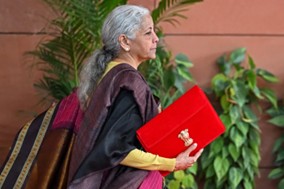
India’s government has presented its annual budget for 2026-2027, prioritizing infrastructure and domestic manufacturing to sustain growth amid global trade uncertainty. Finance Minister Nirmala Sitharaman outlined total expenditure estimated at $583 billion, with infrastructure spending increasing to 12.2 trillion rupees ($133 billion) from 11.2 trillion rupees ($122 billion) in the previous year.
The budget projects GDP growth between 6.8 and 7.2 percent for the coming fiscal year, slightly softer than this year’s projected 7.4 percent but still outpacing global estimates. The government aims to boost manufacturing in seven strategic sectors: pharmaceuticals, semiconductors, rare-earth magnets, chemicals, capital goods, textiles, and sports goods, while stepping up investments in artificial intelligence.
Despite increased spending, the government targets reducing the fiscal deficit from 4.4 percent to 4.3 percent of GDP and lowering the debt-to-GDP ratio from 56.1 percent to 55.6 percent. Sitharaman offered no populist tax cuts, marking a departure from last year’s budget that wooed the middle class.
Prime Minister Narendra Modi stated the nation is “moving away from long-term problems to tread the path of long-term solutions,” emphasizing that predictability fosters global trust. The budget comes as India has weathered US tariffs of 50 percent imposed over Russian oil imports, offsetting impact through trade agreements like the recent EU pact.
However, challenges remain, including manufacturing contributing under 20 percent of GDP against a 25 percent target, and the rupee weakening to all-time lows following $22 billion in foreign equity sales since January 2025. One analyst described it as “a budget without fireworks – not a big positive, not a big negative.”