


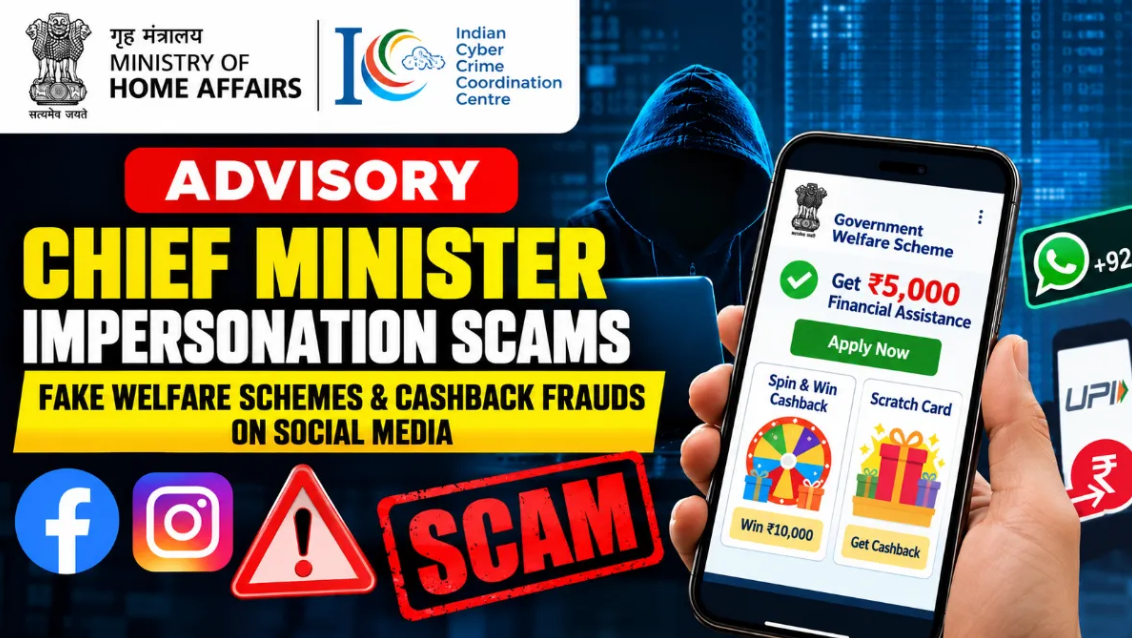
The Indian Cyber Crime Coordination Centre (I4C), under the Ministry of Home Affairs, has warned citizens about fraudulent social media advertisements that impersonate Chief Ministers and other public figures to promote fake government welfare schemes and cashback offers. The advisory, issued by the National Cybercrime Threat Analytics Unit (NCTAU) on October 19, 2026, highlights how scammers use manipulated videos and deepfakes to deceive people and extract money.
The fraudulent advertisements circulate on platforms such as Facebook and Instagram. They may feature the Prime Minister, Finance Minister, Chief Ministers or other public figures to make false promises of financial assistance and cashback rewards.
How Fraudsters Use Fake Welfare Schemes to Steal Money
According to the advisory, scammers use manipulated videos and deepfake content to make fraudulent schemes appear genuine. Some advertisements also promote fake cashback rewards through scratch cards and spin-and-win contests to attract users and obtain their personal information.
Victims may be directed to fraudulent websites, phone numbers or WhatsApp accounts to claim the promised benefits. In some cases, fraudsters contact people through international numbers, including numbers beginning with +92. The advisory urges citizens to treat such contact with extreme caution.
Scammers then demand advance payments under the pretext of registration fees, taxes, verification charges or processing costs. In cashback frauds, they may persuade victims to approve UPI collect requests or enter their UPI PINs. Instead of receiving money, victims unknowingly authorise payments to the fraudsters and may suffer repeated financial losses.
I4C Advises Citizens to Verify Schemes
I4C has advised citizens to verify welfare schemes through the official websites of the relevant government departments before sharing personal information or making payments. People should also confirm the identity of anyone claiming to represent a government department through official channels.
The advisory cautions citizens against sharing Aadhaar details, PAN information, bank credentials, one-time passwords (OTPs) or UPI PINs with unknown persons. Users should carefully review payment requests and remember that a UPI PIN authorises a payment; it is not required to receive money.
Citizens should also remain cautious of videos and voice recordings featuring public officials, as these may have been manipulated to make fraudulent offers appear authentic.
How to Report Cyber Fraud
Anyone who suspects cyber fraud should report it immediately by calling the national cybercrime helpline at 1930 or visiting the National Cyber Crime Reporting Portal.
The I4C advisory highlights the risks associated with fake government schemes, political impersonation and fraudulent cashback offers. Citizens are encouraged to verify claims through official sources and exercise caution before sharing personal information or approving digital payments.