


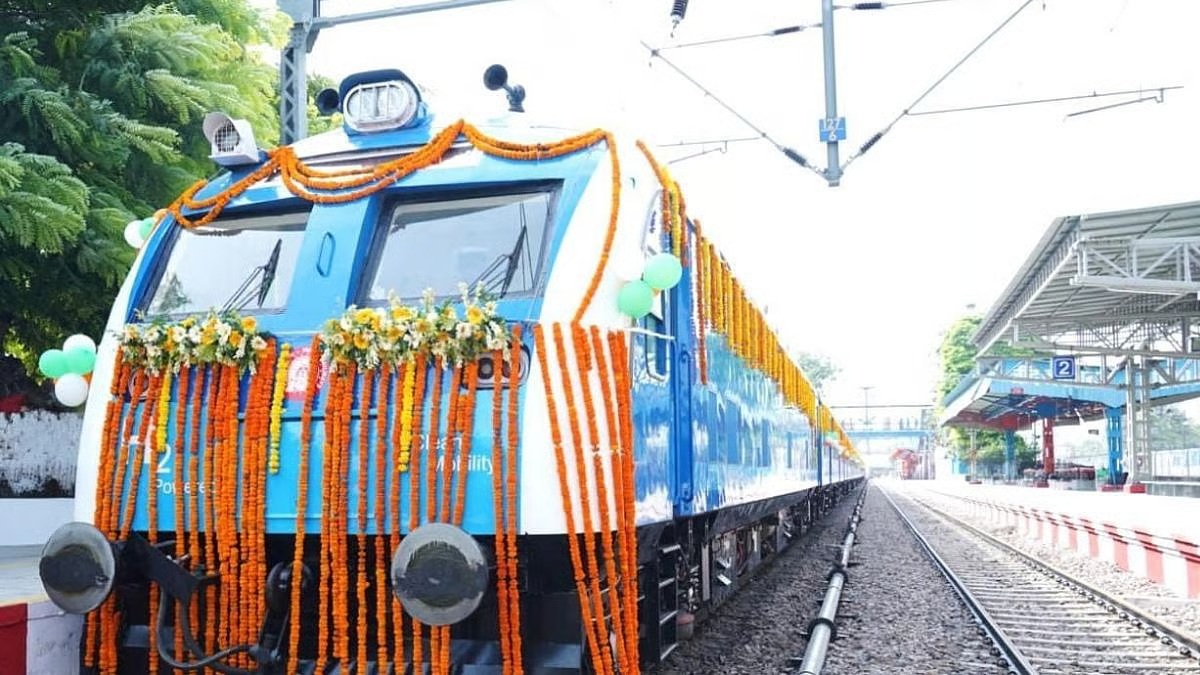
Launching its first indigenous hydrogen fuel cell train, India has begun a new era in environmentally friendly transportation, further solidifying the nation’s dedication to renewable energy, zero-emission transportation, and the Atmanirbhar Bharat goal. The government of India announced on Sunday that the Jind-Sonipat section of the Northern Railway will be served by a hydrogen-powered train that was planned, engineered, and integrated using indigenous technology. This 2,600-passenger project showcases India’s increasing competence in creating cutting-edge hydrogen-powered transportation systems, which help to lessen reliance on fossil fuels.
An electrochemical interaction between hydrogen and oxygen across a Perfluorosulfonic Acid (PFSA) polymer membrane powers the train’s Proton Exchange Membrane Fuel Cell (PEMFC). This method is completely emission-free, unlike traditional diesel locomotives, which release nothing but heat and water vapour. This hydrogen-powered train can reduce carbon emissions and improve environmental sustainability with its operational speed of 75 kmph and design speed of 110 kmph, making it ideal for regional passenger services.
In Jind, Haryana, Indian Railways has set up a specialised hydrogen refuelling ecosystem to back the new tech. An ecosystem for hydrogen-based railway operations is created by the facility’s infrastructure, which includes production, storage, compression, and dispensing of hydrogen. The initiative is in line with India’s larger plan to build a domestic hydrogen value chain, which involves fostering innovation and increasing the use of clean fuels in the transportation industry. In the long run, it will help the nation achieve its goals of promoting hydrogen as a renewable energy source, which are outlined in the National Green Hydrogen Mission.
The development of the train has been guided by a strong emphasis on safety. Its cutting-edge hydrogen leak monitoring systems can see the tiniest of breaches as they happen, guaranteeing dependable and risk-free operations. The indigenous hydrogen fuel cell train is more than just a technical feat; it also paves the way for an entire ecosystem of hydrogen-powered trains in India. Indian industrial capabilities will be bolstered, innovation will be accelerated, greenhouse gas emissions will be reduced, and the country will be positioned to lead the world in sustainable rail transportation.
Achieving zero-emission transport, bolstering the domestic hydrogen ecosystem, and furthering India’s clean energy and sustainable mobility goals are all made possible with the inauguration of India’s first indigenous hydrogen fuel cell train. This is a significant milestone for Indian Railways.
Image: Free Press Journal