

Indian Railways has approved the ₹122 crore doubling project for the 6 km Barbil–Bolanikhadan section of South Eastern Railway to boost iron ore freight capacity.
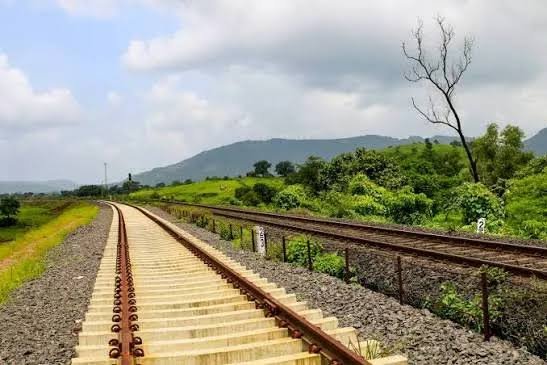
Indian Railways has approved the ₹122 crore doubling project for the 6 km Barbil–Bolanikhadan section of South Eastern Railway.
The project has a completion cost of ₹122 crore and will strengthen rail infrastructure on an important mineral movement corridor.
₹122 Crore Doubling Project to Boost Freight Capacity
The ₹122 crore doubling project will facilitate additional freight traffic of 8.9 MTPA on the section after commissioning.
The doubling of the railway line will also help reduce delays to freight trains and improve the movement of iron ore.
The Barbil–Bolanikhadan section has been identified under Indian Railways’ Energy, Mineral and Cement Corridor.
The existing section is a single-line route and currently handles about 9 MTPA of traffic.
It carries around six loaded rakes per day of originating iron ore traffic.
Barbil–Bolanikhadan Section Handles Iron Ore Movement
The traffic on the section mainly comprises high-grade iron ore and pellets.
The material moves from SAIL’s Bolani mines and private sidings, including Rungta and Khatau Narbheram, to major steel plants and ports.
The existing single-line infrastructure faces growing freight requirements as mining, industrial and port activities expand in the region.
The ₹122 crore doubling project will add capacity to support this increasing freight movement.
Doubling Project to Address Future Capacity Requirements
The doubling of the 6 km stretch is being taken up ahead of the full realisation of SAIL’s mine expansion and additional port and plant capacity.
The project is expected to help prevent capacity constraints in the designated mineral corridor.
It will also improve rail connectivity for the movement of iron ore to steel plants and ports.
Project to Strengthen Mineral Freight Corridor
The Barbil–Bolanikhadan doubling project will strengthen rail capacity along an important mineral movement route.
It will support smoother freight operations and help accommodate future traffic growth.
The project will also strengthen the Energy, Mineral and Cement Corridor and support the expanding mining, industrial and port ecosystem in the region.
Source: PIB