

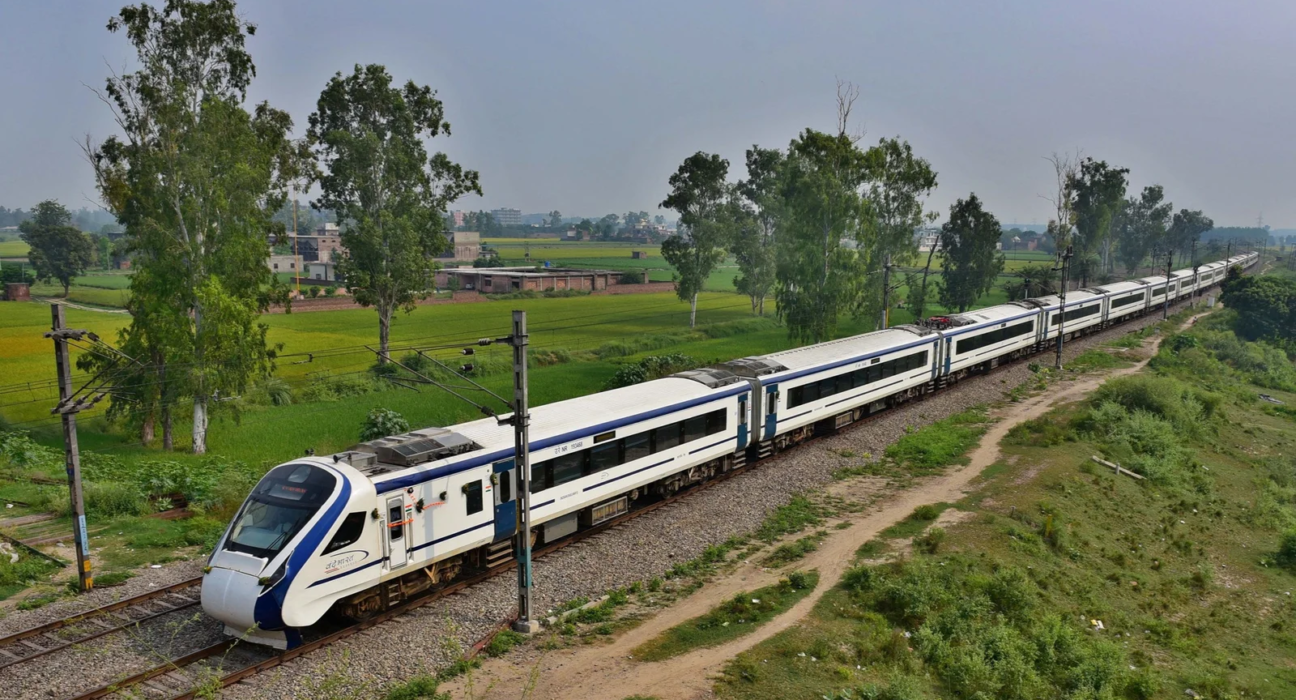
According to the Ministry of Railways, the length of Indian Railways lines that allow trains to travel at speeds of 110 kmph and above has more than doubled in the past 11 years, rising from 31,445 km in 2014 to 84,244 km today.
High-speed lines now make up almost 80% of the nation’s rail network, up from roughly 40% in 2014. This allows for quicker and more effective train operations.
According to the Ministry, Indian Railways has consistently invested in safety improvements and track infrastructure, leading to safer, quicker, and more dependable rail services across the country.
Over 6,851 track km were renewed during FY 2024–2025. The ongoing emphasis on asset reliability and safety is demonstrated by the more than 7,500 km of renewal work that is now under way in the current fiscal year 2025–26 and the 7,900 km that are scheduled for renewal in 2026–27.
Indian Railways has made fencing along railway tracks a top priority in order to improve safety on high-speed portions and reduce trespassing and cattle run-over occurrences. So far, some 15,000 kilometres of fencing have been installed.
The revival of turnout has also accelerated. The railways installed 1,704 weldable CMS (Cast Manganese Steel) crossings and 7,161 thick web switches in 2024–2025. More than 3,000 weldable CMS crossings and more than 8,000 thick web switches will be deployed in 2025–2026.
Ballast has regularly undergone mechanised deep screening, which is essential for preserving track stability and ride quality. According to the Ministry, over 7,500 track kilometres are being covered in 2025–2026, compared to 7,442 track kilometres that were deep screened in 2024–2025.