


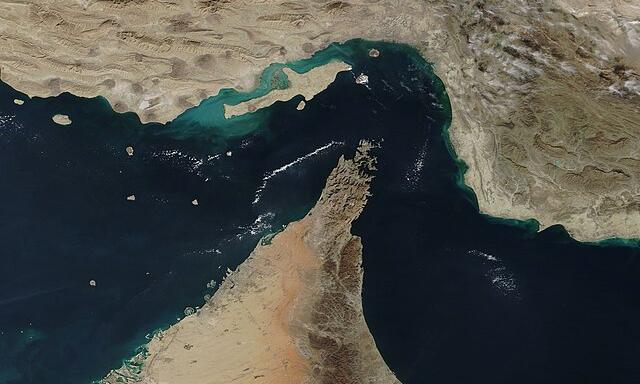
After Iran’s announcement that it would be closing the strategically essential Strait of Hormuz, a world-renowned oil transit route, global oil markets were rocked by new uncertainty.
The Iranian government has announced that the little canal, which carries about 20% of the world’s oil every day, is now closed. Iranian state media issued a strong warning, stating that the Revolutionary Guards and navy would respond violently to any ship trying to enter the border. Despite being about 33 km wide at its narrowest point, the strait transports a substantial portion of the world’s energy sources.
The United Arab Emirates, Saudi Arabia, Iran, and Iraq are among the major oil-producing states that the Strait links to the Arabian Sea and the Gulf of Oman. Any disturbance in this area has the potential to cause ripple effects in the energy markets throughout the world.
That response was quick. As markets reopened on Tuesday in response to rising tensions in West Asia, crude oil prices increased by 1% in early trade, building on Monday’s stunning 10% spike. Fuel prices might skyrocket around the world if the closure continues to stifle supply, according to traders.
This follows airstrikes by the United States and Israel against Iranian targets, with the stated goal of degrading Iran’s government and military might. There is growing concern that the situation could escalate further as a result of Iran’s missile attacks on Gulf states.
Even if oil prices don’t rise, the consequences will have repercussions. Charter rates for liquefied natural gas (LNG) tankers in the Atlantic Basin now exceed $200,000 per day, virtually doubling the cost of shipping. The escalation of tensions in the region has reportedly led Qatar to suspend LNG production.
This is a very delicate matter for India. In fiscal year ’25 (FY25), the value of oil imports was over $160 billion, and the nation imports roughly 90% of its crude oil requirements. The economy could feel the effects of rising fuel prices, more inflation, and more strain if crude prices continue to rise.
The United States has said it is prepared to act to stabilise markets and protect global shipping routes. While markets are responding strongly, officials insist that Washington had planned for the possible consequences as it maintains military operations against Iran’s missile and naval infrastructure.
All eyes are on this situation for the time being. Energy prices and economic stability around the world could be profoundly affected by the events unfolding in the restricted waters of the Strait of Hormuz.