

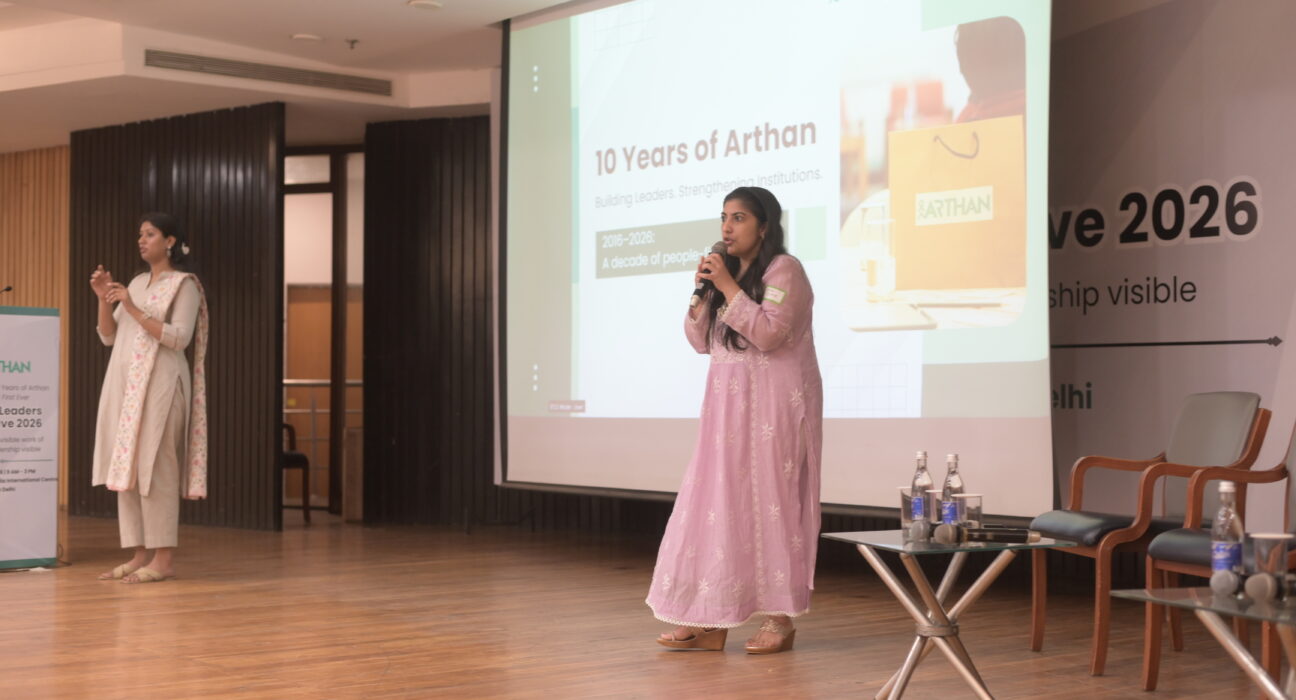
Arthan convened its first-ever People Leaders Conclave 2026 in New Delhi, bringing together
senior people leaders, HR heads, and organisational builders from across India’s social impact
ecosystem. The gathering created space for sector leaders to reflect on how organisations build
leadership pipelines, navigate moments of institutional transition, and strengthen internal systems
as they grow in scale and complexity.
The conclave also marked an important moment for Arthan as the organisation reflected on ten
years of partnering with mission-driven institutions to strengthen leadership, teams, and
organisational capability across the sector. The day began with a welcome address by Satyam
Vyas, Founder and CEO, Arthan, who set the context for the conclave and reflected on the
importance of strengthening people’s leadership in the social impact sector. This was followed by
reflections on Arthan’s ten-year journey of building leaders and institutions, shared by Anchal
Kakkar, Co-founder, Arthan, highlighting the organisation’s work alongside mission-driven
institutions to strengthen leadership, teams, and organisational capability over the past decade.
The first panel discussion, Decisions That Shaped the Organisation, explored the leadership
decisions that significantly influence organisational evolution. The conversation examined how
leaders navigate moments of growth and transition, and how culture, governance, talent, and
systems intersect during these phases. The discussion featured Shrashtant Patara, Development
Alternatives; Dr. Aparajita Gogoi, Centre for Catalyzing Change; Puneet Bali, Smile Foundation;
and Tahira Thekaekara, WRI India, and was moderated by Rahul Balakrishnan, Arthan.
Reflecting on the role of internal leadership in sustaining organisational philosophy while scaling
programmes across contexts, Dr. Aparajita Gogoi emphasised the non-negotiables while scaling
a norm-change models, “As we scale our work, one principle we hold close is to safeguard our
organization’s core philosophy while evolving our tactics to reflect the context. One vital strategy
is also investing in leaders who are already part of the institution – mentoring them, opening
doors to leadership, and embracing the risk and not always looking outside.
Reflecting on organisational tensions during growth, Shrashtant Patara spoke about the challenge
of finding a balance, at different times, between “facilitative” or “consultative” and
“authoritative” decision-making, which corresponds to increasingly frequent movement across
the “institution-to-enterprise” spectrum of organizational behaviour; emphasising the need to
“navigate constant tensions between participation, and efficiency. Over time we realised that
leadership is not about choosing one extreme but learning how to balance these tensions while
ensuring that teams remain aligned around a shared ethic driven by effort, knowledge and
engagement – work hard, work smart, and work together.”
From a governance perspective, Puneet Bali highlighted the importance of boards staying
connected with teams beyond senior leadership, noting that “It is important to ensure that
governance does not remain confined to the boardroom, the board must stay connected with the
organisation’s frontline realities by engaging with teams on the ground and understanding the
work beyond the top leadership.”
Tahira Thekaekara also reflected on organisational systems, observing that “too often,
organisations build systems to control the few who might misuse them rather than empower the
many who are performing well. When we design systems around trust instead, we strengthen
culture, create the conditions for psychological safety and healthier work–life balance, and
ultimately nurture, grow, and retain the best talent.”
The second panel, Building Institutions That Can Hold Scale, examined the structural and
leadership considerations required as organisations expand their work. The session featured
Jayesh Joshi, VAAGDHARA; Ritu Mendiratta, Bal Raksha Bharat (Save the Children, India);
Tony Senanayake, Fortify Health, and was moderated by Nandita Krishan, Arthan. The
conversation explored institutional strain during growth phases, the tensions between people’s
aspirations and organisational ambition, and the governance and leadership systems needed to
sustain scale.
Reflecting on governance as a shared organisational responsibility, Jayesh Joshi noted, “In our
work with tribal communities, the idea of swaraj—sovereignty of people and practice is central.
The same principle guides how we think about institutions. Governance cannot simply be
imposed from the top; it has to be created collectively.”
Ritu Mendiratta highlighted the importance of inclusive institutional design, sharing that “as
organisations grow, we sometimes forget the invisible values that helped build them in the first
place. One way to protect those values is to ensure that institutional systems and policies are
designed with representation from across the organisation, especially from the field.”
Speaking about sustaining mission alignment as organisations grow, Tony Senanayake reflected
on purpose-driven leadership, noting, “In the impact sector, we are constantly trying to optimise
for impact, which becomes harder to define as organisations grow and systems become more complex. In that context, one of the most important anchors for institutions is intrinsic
motivation, when people are driven by trust, purpose, and belief in the work. Those are the
values that ultimately sustain organisations over the long term.”
During the conclave, Arthan also shared insights from its Compensation Benchmarking Study in
India’s Social Sector. The study offered reflections on compensation trends, talent retention
challenges, and evolving questions around competitiveness and equity in the sector’s talent
landscape.
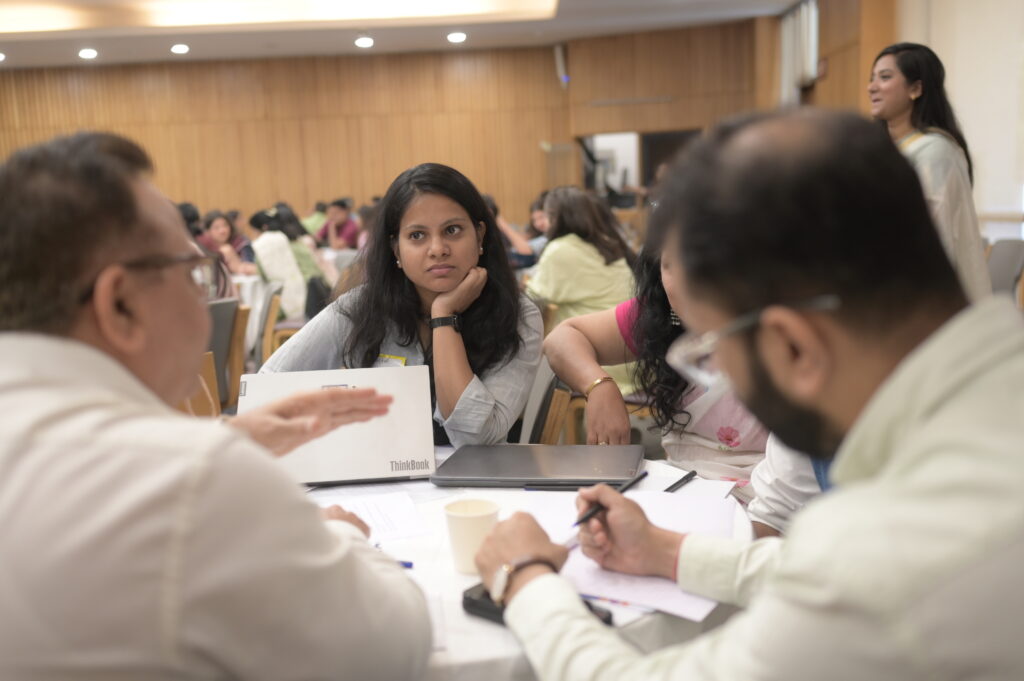
A key part of the conclave was the interactive working group sessions, where participants
engaged in smaller discussions on some of the most pressing people and leadership challenges
facing organisations today. These conversations explored themes including the relationship
between people aspirations and organisational growth, approaches to capability building and
leadership development, institutional readiness for scale, HR’s role in navigating multi-
stakeholder tensions, and the increasing role of AI and technology within people functions.
The day concluded with reflections from across the discussions, highlighting the importance of
institutional thinking, intentional leadership development, and evolving people systems as
organisations grow. Over the past decade, Arthan has partnered with foundations, non-profits,
and social enterprises across India to strengthen leadership, teams, and organisational capability.
The People Leaders Conclave marks the beginning of a broader effort to create spaces where
sector leaders can collectively reflect on the organisational foundations required to sustain long-
term impact.