


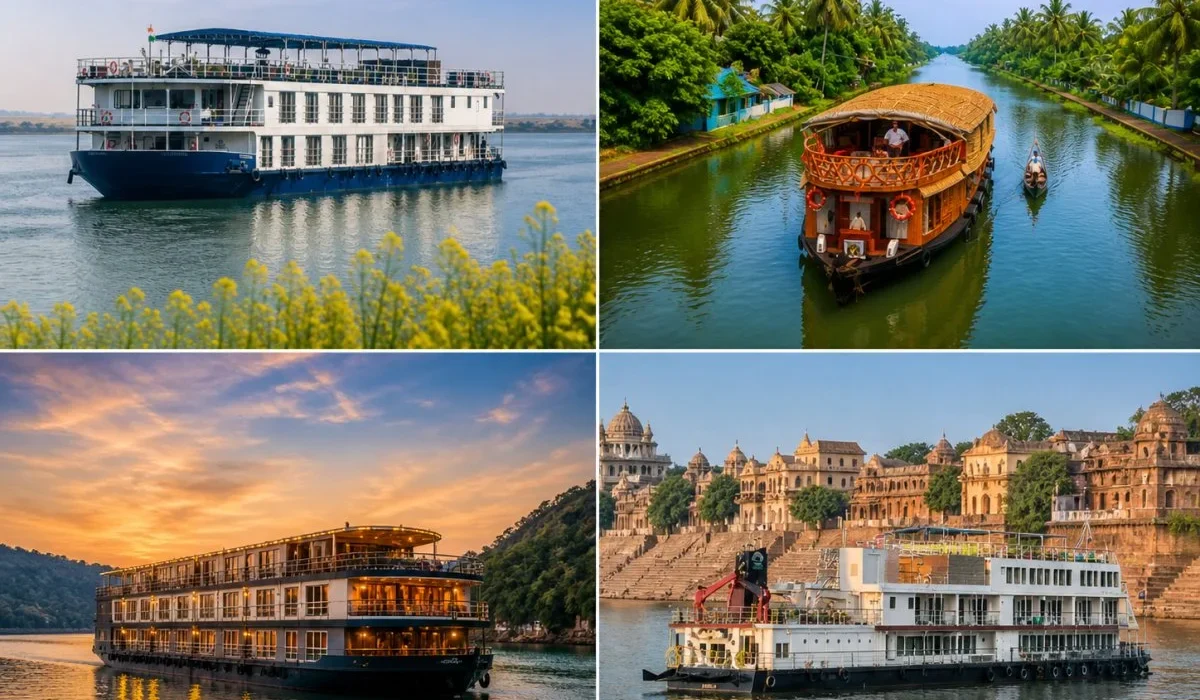
India will add 19 new National Waterways over the next five years. The government identified these corridors mainly for cruise tourism and passenger ferry operations. This move follows the 2026-27 budget announcement and detailed feasibility studies. It marks a fresh push to unlock the country’s river transport potential.
National Waterways Network Already Spans 111 Routes
The government declared 111 inland waterways as National Waterways under the National Waterways Act, 2016. This law replaced separate individual acts and brought all major waterways under one legal framework. It gave the Inland Waterways Authority of India (IWAI) clear powers to develop and regulate these routes.
Of the 111 declared waterways, only 32 are currently operational. They handle cargo and passenger movement across several states. The government prioritises developing existing feasible waterways first. New declarations follow only after this groundwork is complete. This phased approach avoids spreading resources too thin across undeveloped routes.
Why Inland Water Transport Matters
Inland water transport offers a cheaper and greener alternative to road and rail. Cargo moved by river uses less fuel per tonne. It also eases pressure on congested highways. River transport works well for bulk goods like coal, cement, and food grains. It also supports regional tourism, especially in states with scenic river stretches.
The government has pushed inland waterways as part of its broader logistics strategy. Faster cargo movement lowers business costs. It also cuts carbon emissions compared to road transport. States with strong river networks stand to gain the most from this shift.
National Waterways roll out Follows a Five-Year Timeline
The expansion will happen in phases through FY2030-31.
FY2026-27: Jammu & Kashmir gets three new waterways — on the Jhelum, Chenab, and Ravi rivers. Karnataka gains two waterways, on the Kabini and Sharavati rivers. Goa receives the Sal River waterway in the same phase.
FY2027-28: Karnataka adds two more waterways, on the Kali and Ghataprabha rivers. Odisha gets two waterways as well, covering the Birupa-Badi-Genguti-Brahmani system and the Subarnarekha River.
FY2028-29: Goa adds the Chapora River waterway. Kerala gets two waterways, the AVM Canal and the Kottayam-Vaikom Canal.
FY2029-30: Maharashtra receives two waterways, on the Savitri River and Bankot Creek, and the Dabhol Creek-Vashishti River. Tamil Nadu gets the Bhawani River waterway.
FY2030-31: The final phase covers three regions. Himachal Pradesh and Punjab share the Sutlej River waterway. Karnataka gets the Panchgangavali River. Uttar Pradesh receives the Gandak River waterway.
This staggered rollout lets IWAI and state governments plan infrastructure, jetties, and navigation systems in advance. It also allows environmental and feasibility checks before each launch.
Focus on Tourism and Regional Connectivity
Most of the 19 new waterways target cruise tourism and passenger ferry services rather than heavy cargo. This signals a shift toward leisure and local connectivity. Hill states like Jammu & Kashmir and Himachal Pradesh could see new river tourism circuits. Coastal states like Goa and Maharashtra may benefit from scenic backwater cruises. Kerala’s addition builds on its existing reputation for backwater tourism.
Better waterway connectivity can also help remote communities. Ferries offer a practical alternative where roads are limited or hilly terrain slows travel. This can improve daily commutes and access to markets in some regions.
National Waterways Minister Confirms Plan in Parliament
Union Minister Sarbananda Sonowal shared these details in a written reply to the Rajya Sabha. He heads the Ministry of Ports, Shipping and Waterways. The ministry aims to boost tourism, regional connectivity, and logistics efficiency through this expansion.
The government’s approach reflects a broader push under its maritime and logistics policies. Officials have repeatedly flagged inland waterways as an underused mode of transport in India, compared to countries like China and parts of Europe. This latest expansion aims to close that gap gradually, one river corridor at a time.